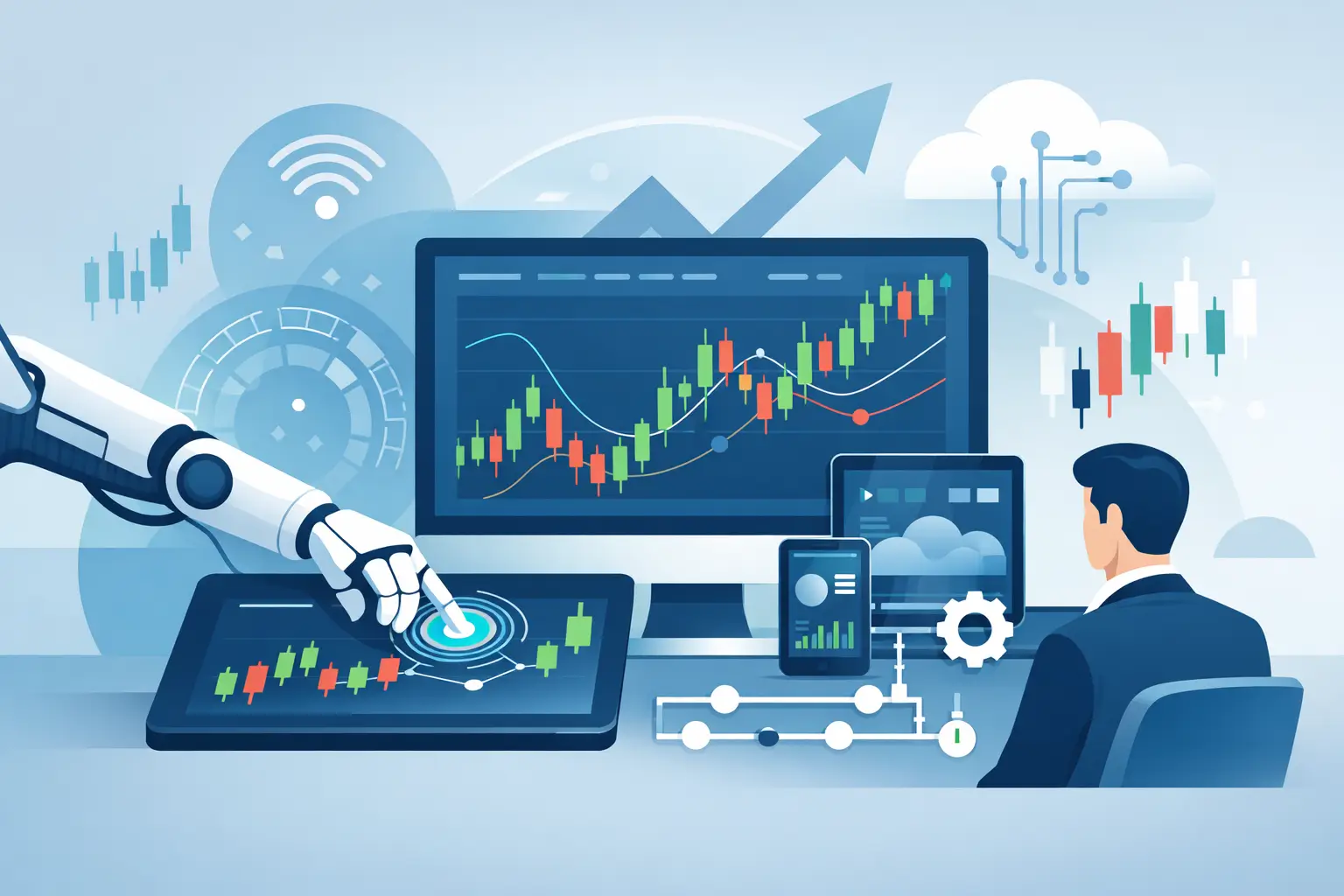
A signal that appears after the opportunity has passed is not a trading edge. For active traders, the real value comes from turning a defined setup into a timely, repeatable action. Learning how to automate trading signals starts with a clear distinction: automation should enforce your process, not replace it with a black box.
A rules-based system can scan more markets, evaluate conditions without fatigue, and react faster than manual chart watching. It can also magnify weak logic, poor risk controls, and unrealistic testing assumptions. The objective is not to automate every decision on day one. It is to automate the parts of your process that are objective enough to be measured.
Start With a Signal That Can Be Defined
Most discretionary trade ideas are too vague to automate. “Buy strength,” “sell when momentum looks exhausted,” or “avoid choppy conditions” may reflect useful experience, but a computer needs explicit conditions.
Define the setup in terms your platform can evaluate. A long signal, for example, might require price above a rising moving average, relative volume above a threshold, a volatility filter that confirms adequate range, and a market-internals reading that supports broad participation. The entry can then trigger only when price breaks a specified level, during a defined session, with a predetermined stop location.
The more precise the rules, the easier it becomes to identify where discretion still belongs. Some traders want full automation because their edge is entirely systematic. Others use automation to identify high-probability trades, then make the final execution decision based on current liquidity, news risk, or broader market context. Both approaches can be valid if the boundary is deliberate.
Separate setup, trigger, and risk rules
Treat these as three different components. The setup identifies favorable conditions. The trigger determines the exact moment to act. Risk rules define position size, stop placement, profit management, daily loss limits, and conditions that suspend trading.
This separation prevents a common failure: building a signal that looks accurate in historical charts but has no executable trade logic. A useful signal must tell you what to do, when to do it, and what invalidates the trade.
Choose the Right Level of Automation
Automation is not an all-or-nothing decision. The appropriate level depends on your market, timeframe, execution requirements, and confidence in the strategy.
For many serious traders, alert automation is the best starting point. The system scans symbols and sends a notification when every condition is met. You retain approval over the order, which is useful for intraday futures, fast-moving equities, or markets where scheduled events can materially change the trade.
Semi-automated execution goes one step further. Once you approve a signal, predefined order templates place the entry, stop, and target structure. This reduces execution errors and helps maintain consistent risk across trades.
Fully automated trading sends orders without manual approval. It can be appropriate when the strategy has stable rules, sufficient historical and live testing, dependable broker connectivity, and clear safeguards for unusual market conditions. It also requires more operational discipline. A system that can place trades unattended needs controls for data errors, rejected orders, partial fills, connectivity failures, and abnormal volatility.
Build the Signal Logic Around Market Conditions
A signal should not operate as though every session has the same character. Trend-following logic can perform well during directional expansion and poorly during compressed, rotational conditions. Mean-reversion systems face the opposite challenge.
Use filters to restrict trades to conditions that support the strategy. Volatility tools can help determine whether the market has enough range for a breakout target or is extended enough for a reversion setup. Volume analysis can distinguish a meaningful move from a thin, low-participation drift. Market internals can add context when trading broad index products or highly correlated equities. Seasonality may provide a secondary filter for swing traders, but it should not override current price and risk conditions.
The goal is not to add indicators until the chart becomes complicated. Each filter should answer a specific question: Is the market trending? Is participation strong enough? Is volatility appropriate? Is the instrument liquid enough to execute the planned order? If a condition does not improve decision quality or risk control, it may be unnecessary complexity.
Test Before You Connect a Signal to Capital
Backtesting is necessary, but it is not proof that a strategy will perform in live markets. Historical results often look cleaner than real execution because they can omit slippage, commissions, spread changes, delayed data, and the effect of partial fills.
Start by testing the rules across different market environments, not only the period that produced the best result. Include trending phases, range-bound markets, high-volatility periods, and sessions with changing liquidity. Review the distribution of returns, maximum drawdown, consecutive losses, average trade duration, and the sensitivity of results to small parameter changes.
A strategy that works only with one exact moving-average length or one narrow threshold may be curve-fit. A more credible system generally retains acceptable performance across a reasonable range of settings. It does not need to win in every environment. It needs to have a defined edge, known weaknesses, and risk limits that account for those weaknesses.
Move from simulation to controlled live trading
Paper trading can verify that alerts, orders, and calculations work as expected, but simulated fills are often optimistic. After paper testing, consider trading the system with reduced size. This is where you validate the gap between backtest assumptions and live reality.
Keep a record of every generated signal, whether it was executed, the actual fill price, slippage, any platform issues, and the reason for overrides. That audit trail is critical. Without it, traders often blame or credit the strategy for results caused by inconsistent execution.
Automate Risk Before You Automate Entries
The most useful automation often happens after a signal is generated. A disciplined system can calculate position size from a fixed dollar risk or percentage of account equity, attach protective stops immediately, and prevent orders that exceed your maximum exposure.
Set controls that reflect how you actually trade. A day trader may use a daily loss limit that disables new entries after a specified drawdown. A futures trader may cap contracts based on current volatility. A swing trader may limit correlated positions so several trades do not become one oversized market bet.
At minimum, establish controls for:
- Maximum risk per trade and maximum total open risk
- Daily, weekly, or session-level loss limits
- Position-size limits by instrument and volatility level
- Time windows when the system may enter new positions
- A manual kill switch for unexpected market or technology events
A kill switch is not an admission that automation is unreliable. It is a professional requirement. Markets can gap, data feeds can fail, and order-routing behavior can change. Your trading process needs a clear way to stop new activity while you evaluate the situation.
Monitor the System Like a Trading Desk
Automation reduces repetitive work. It does not eliminate oversight. Review signal quality and execution quality separately. If signals are appearing at the right moments but trades are underperforming, the issue may be order type, fill quality, target placement, or a changing market regime. If signal quality itself has deteriorated, revisit the underlying conditions and filters.
Avoid changing rules after a small sample of losses. Every viable system experiences drawdowns. Changes should be based on evidence, not discomfort. Define review intervals in advance, such as weekly execution checks and monthly performance analysis, with larger strategy changes considered only after sufficient data.
This is also where education and mentorship can shorten the learning curve. Experienced traders can help identify whether a problem is coding logic, overfitting, risk sizing, or a mismatch between the system and the trader’s intended market behavior. Tools matter, but the process around the tools determines whether they are used with discipline.
The Goal Is Repeatable Decision-Making
The best automated signal workflow does not promise perfect entries or constant profits. It creates a reliable chain from market data to rules, alerts, execution, and risk management. That structure removes avoidable hesitation while preserving the judgment that still matters.
Start with one setup you can explain in plain language, automate its objective components, and measure every result. As confidence is earned through testing and controlled execution, automation becomes less about speed and more about trading the same disciplined process when the market gives you the opportunity.